Browsed by
Author: Simply Happier

Look Forward to Something

Look Forward to Something

look-forward-to-somethingHaving something to look forward to can be a key source of happiness in your life. It doesn’t really matter what you are looking forward to. All that really matters is that it is something you can realistically expect to occur, and that you genuinely look forward to it. Having something like this in your life helps in a number of ways. One way is by giving you a reason to be happy through bad situations. It reminds you that no matter what the bad situation is, good things are coming. This helps you find motivation when you need it most. Another way having something to look forward to in your life helps is by making good times even better. This is because it adds an extra reason to be happy during these times in your life.

Finding something to look forward to
Overall, having something like this in your life can make a wonderful contribution to your happiness. Unfortunately though, its not always very easy to have some great thing that you can draw upon to receive these benefits. Don’t worry if you are having trouble finding this particular source of happiness in your life. With a little bit of time and effort, you can get some pretty good ideas of things to look forward to.

One place to look for this is in your future. After all, the future would be the place where the thing you are looking forward to would be occurring. When thinking of the things you expect to occur in the future, ask yourself if there is anything that you are particularly excited about. Is there more than one thing? If so, which one are you most looking forward to? Which one do you believe has the potential to make you the happiest? Find the answers to these questions, and you may have just found something great to look forward to.

Creating something to look forward to
If finding something to look forward to isn’t working out quite as well as you had hoped(or if you just want more to look forward to), you can always create something new. Even if there is nothing that you are really excited about, you can always bring new things into your life. This idea by itself can be a powerful tool to help create something new in your life.

A good place to start is to look at some of the things that you may want to change in your life. These should be things that aren’t so hard to change that it seems impossible. At the same time they shouldn’t be things that are easy enough to do in 10 minutes. If you don’t think of anything at first, try again at a later time. Inspiration can come when you least expect it.

When you find a good idea for something you would like to change, the next step is to think of some reasonable ways you can go about making the change. Try to plan out the various things you will need to do(maybe even write them down). This combination of an idea and plan for change can lead to you having something great to look forward to.


Working through obstacles

Working through obstacles

working-through-obstaclesOften when you are trying to achieve some sort of goal, obstacles inevitably come crashing down in front of you in one form or another. Sometimes if the obstacle is large enough, its like hitting a brick wall which causes your progress to come to a complete stop. This is both demoralizing, and just plain annoying. With constant interruptions in progress, its surprising that anything ever gets done properly, if at all. Actually, often things don’t get done for this very reason. Thankfully, it does not always have to be that way. While it may be true that there isn’t always much you can do to prevent obstacles themselves since they can be quite unexpected, there are things you can do about them when they do occur. Listed here are a few useful things to help you work through obstacles when you are trying to achieve a goal.


1) Keep Going
If you give up, then you pretty much have increased your chances of failure to the point of near certainty. Unless you really don’t care about completing what you are doing, then this is almost never a good option(although it is often an easy one, which is part of what makes just quitting so appealing). When you feel the desire to quit, you must remind yourself why your goal is important, and what good things you expect it to bring. Use these ideas to keep yourself going when an obstacle tries to throw you off course.


2) Imagine Your Results
It can be really helpful to just sit back for a minute and imagine what it will be like to finish your task. Think about the good things that will come. Think about who you might tell, and how you will feel. Take these feelings, and then use them as a source of motivation. Keep these feelings in mind when you are feeling particularly doubtful about getting through a situation.


3) Write things down
Sometimes working out solutions to problems in your head may not be the best way of finding a solution to something. When an obstacle is in your way, try writing about it instead. Write out what the problem is, why it became a problem, and a list of possible ways to solve it. Start out by being very brief. Don’t worry about the details, just get down the main points. Later, if you think of a better solution, or more details you can write them down. This essentially becomes your game plan for overcoming the obstacle. Also, it can later serve as record of your progress. If you collect enough of these records of progress, they can be used as a powerful tool to help you overcome other obstacles by giving you some ideas of what things have worked previously on the various things you have encountered. You can even highlight some of your best ideas which think might be useful in other situations.

4) Ask for Help
You may not be strong enough to face certain obstacles alone. In this case you will need to get help. It can come from well known places such as a friend or family member. It might also come from somewhere unexpected. The hard part here is to be able to realize when you need help, and have the courage to actually ask for it. If you don’t ask for it, then the chances of getting it are probably pretty small.


5) Don’t stress yourself out
When obstacles get in your way, its not easy to stay calm and think things through. When something is keeping you from your goal, you want to stop it, and quick. This brings up all kinds of feelings of anger and frustration which only help keep your goal out of reach. It is important to remember that anger and frustration are not usually your best set of tools when you need to find a solution to something. They can cloud your judgment and thinking process. Accept that the obstacle may be in your way, and try your best to keep yourself from getting too worked up over it. Just remind yourself that there is probably a decent solution to the problem, but you just haven’t thought of yet.

Invest in Your Happiness

Invest in Your Happiness

invest-in-your-happinessMoney can either be a great contributor to happiness, or a great source of unhappiness. It all depends on how you use it. In a way, it works to enhance whatever you use it for. It can help obtain many of the things that contribute to being happy such as healthy food, a good place to live, and even medicine for sickness. Without it, quite a bit of suffering can occur. But at the same time, it can be used for things that are not so good, such as to obtain unhealthy food, and support bad addictions. This is why it is important to be very aware of how you are actually using your money, and make smart decisions about what you spend it on.

What you use your money for can be one of the most important decisions you make.

Money can be a great tool for happiness, if you make it one. But that’s just it. You actually have to make it one. Aside from temporary feelings of abundance, it doesn’t usually just make you happy by simply being around. Its more of a neutral medium that you use turn into something good or bad. Exactly how you use it is what determines whether or not it contributes to your happiness. It is up to you to determine the functionality of your money.

Of course the desired outcome is to have money contribute to your overall happiness, but its easy to become unaware of just what you are actually spending it on. Without having the discipline and awareness necessary to spend your money in ways that are beneficial, the chances of making investments which only contribute to unhappiness can increase greatly.

To make sure that you are using your money for things that really matter, and on things that will contribute to your overall sense of happiness, you will need to take a close look at how you are currently using it. Upon closer examination it is up to you to try and pick out the things that are ultimately good or bad for you.

Some things you are spending your money on can be pretty easy to pick out as bad choices, while others may not. It may take some trial and error in order to find out where some bad choices actually are. The key here is to be aware of what you are spending money on, and take a close look at the outcome.

Here are a few questions to determine if you are making decisions with your money that are contributing to your overall happiness.

1) Do you often feel regretful about your purchases?
If you often look back on what you buy as something that you really shouldn’t have bought after all, then you may need to set aside a bit more time and thought into what you are buying because it this may likely be a sign that you are using your money in ways that are not really helping you. One of the key things here is to use this question to help you, instead of a reminder of weaknesses. Don’t look at it as a reason to just feel bad about a mistaken purchase. Look at it as an opportunity to learn from your mistakes. Instead of the mentality of “I really shouldn’t have done this” a more useful way of thinking would be “Okay it happened. Now what can I do to make sure I make better decisions in the future?”. Use your spending mistakes as opportunities to learn instead of opportunities to beat yourself up. By doing this you will be able to make better decisions about your spending in the future.

2) Do you buy healthy food?
This question is important because healthy food can contribute to your overall happiness quite a bit. It is beyond the purpose of this article to discuss what healthy food may be. There are a number of other places to find this information such as books, websites, and magazines. You may even want to take a look at the Nutrition section of this website for some ideas.

3) Do you think you spend too much?
Are you always buying things you know you cannot afford? There is quite a difference between overspending a little now and then, and being constantly broke from shopping sprees. The first situation may make you feel remorseful now and then, but the second situation can be a major contributor to unhappiness by taking away this resource from areas of your life that could really use it. If you don’t have the money to buy something non-essential which you want, do you often get it anyway, or do you make due and live without it? If you are overspending to the point where you are taking away from more important areas of your life, then it may be time to cut back a little bit.

4) Do others think you spend too much?
Sometimes its hard to spot if you are spending so much to the point that it is taking away from more important things. In this case it can be useful to take a look through an outside perspective. Be careful if you choose to ask for others opinions though, since you may not always like what you hear.

5) Do you know your limits?
Are you currently aware of how much you can reasonably spend on various things? If not, then do you often worry about if you can afford the things you buy? If this is the case then it can be useful to a set budget for yourself. Find something that is both reasonable and something that you feel comfortable with. By having a budget you save yourself the stress of having to worry about if the things you buy are things that you can actually afford. This gives less of a chance for doubt, regret, and other unhappy thoughts to set in after a purchase.

Getting Through Bad Times

Getting Through Bad Times

getting-through-bad-timesJust about everyone will inevitably have some times in their lives that they don’t like. In fact, chances are you have already had quite a few of them. Usually these times have something that causes them. It may be a job you don’t like, a friendship gone bad, or a bad living situation. Whatever the reason, when you are going through a bad time it’s usually pretty easy to spot the source. What isn’t usually easy though, is making things better. Depending on the situation, getting out can be a real big task. Listed here are some things that may help you find your way out.


Don’t make things worse.
A bad situation is not the best place to find yourself, but that does not mean you need to make it worse. Unfortunately though, many times this is exactly what seems to happen. Bad situations like to perpetuate themselves, and while this happens you continuously react adversely to it, which continuously makes things worse. And then the cycle repeats. The trick here is to realize when you are in this cycle and try to break it. Instead of letting the situation control you, take control of it yourself. This requires you to be aware of yourself reacting to the situation as it happens. One important thing to ask yourself before reacting to the situation is: Will this make things better or worse?


Talk yourself down.
Often times you may get yourself a lot more worked up more than you really need to be. This can usually happen automatically as your initial reaction. Getting overly upset about something usually only makes things worse, which is why one of the first things you should consider trying to do is calm yourself down. Everyone has their own ways of doing this. For you it may be doing something relaxing such as reading, or maybe even something active such as exercising. You will need to find what works for you, and try remember to apply it when you feel you may be getting more upset than you really should be about something. Getting overly upset about things usually only hurts your situation and makes your problems seem worse than they really are.


Keep yourself busy.
The busier you keep yourself, the less you will be able to think about being unhappy. This works well when you find yourself in bad situations where time is the only thing that makes things better. This also works well if you feel that the best way for things to get better is to wait it out for a while. Either way, if you spend your idle time in boredom, it becomes easy for you to dwell on the bad things. To avoid this, it is best to keep yourself busy. In order to have the best chance of not letting yourself dwell on the situation, try to think of some of the things that will keep you the most actively engaged. The more “into” something you are, the less you’re into other things(like dwelling on the bad situation).

Here are a few ideas to keep yourself busy:
Exercise.
Finish old projects.
Start a new project.
Learn a new skill or language.
Join a local sports league.
Do something to help someone else.
Take some classes on something that interests you.
Read books/newspapers/magazines/articles.

These were just to get you started. There are so many things out there.


Remember, the situation is only temporary.
Fortunately, most bad situations are only temporary.  Whenever you find yourself in such a situation, just keep in mind that it is only temporary. Remember that you are only in this specific situation until something happens to get you out, or you do something to get out of it. Either way, remember that something usually changes for the better. Situations change minute by minute and day by day.


Talk to someone about it.
Its not always easy to talk to other people about our issues, but sometimes summing up the courage to talk about it is way better than having to just sit and deal with it ourselves. Others can also give you insights that you may not have thought of. It may be that your solution is acquired thorough an outside perspective, such as the advice of a friend of family member.


Use past victories.
Chances are you’ve been through a lot of stuff in life that’s been pretty bad before, which you have gotten through just fine. Draw upon this idea to help remind yourself that this is just another one of these times. Keep thinking to yourself that you will get over, just like all of the other things you have gotten over.


Take care of yourself.
When bad times are running through your life, it is more important than ever to lead a healthy lifestyle. Make sure you remember to eat healthy, exercise regularly, and if possible get the proper amount of sleep. If you do not do this normally, it may be a good time to start. The boost from this can be a great benefit to your overall well being, and help you get through your situation much easier. Yes this is easier said than done, but the work required to take proper care of yourself can far outweigh the work required to recover from an overly extended bad time you had to go through without being in a very good condition.

Habit Maintenance

Habit Maintenance

habitmaintenanceHabits are like little machines set up automate many of the tasks we do a lot. They can allow us to do things without needing to put much energy or thought into them. Its kind of like having buttons that can be pressed, which set off a series of events. For example, you notice that it is getting close to bed time. Out of habit, you perform your nightly before bed task list. You noticing the late time is like pressing the lets-do-this-stuff-before-bed button. The same goes for waking up in the morning. Getting up is like pressing the lets-do-morning-stuff button.

When habits are working for us, things are pretty good. They are making sure we do the things we need to do, and do them when they need to be done. Unfortunately though, habits do not always work the way we need them to. Quite often they tend to wear out, break, or somehow turn bad before we ever even notice. There are many reasons for this. An entire book could be written on the various reasons why habits don’t work the way we want them to. No matter what the reason though, the point is that many habits seem to occasionally need maintenance.

Just setting up and letting a habit do its thing is okay for a while, but eventually it may degrade and need to be adjusted. Like a machine, broken habits need to be fixed in order to make sure they keep running the way you want them to. This is where you come in.

Finding Habits in Need of Maintenance

You will need to determine which habits are helping your life, and which ones are hurting. In order to do this you need to take a close look at your current set of habits. Start by trying to observe the various things you do automatically. To find the things you do automatically, try just looking at the things you do a lot. Many of the things you do a lot may be automatic without you even knowing it. Habits may take some time identify, just remember keep an eye out for them as you go about your day.

Once you have identified some of your habits, it’s time to begin the process of repairing the broken ones. To begin, you will need to first find out which habits are actually broken. Some may be obvious, and some not so much. The real basic question to ask yourself when encountering a habit is this:

Does this habit help, or harm?

You can use this basic question as the building block for all other questions to help you determine if the habit needs maintenance. You can then further refine the basic question down into many more specific questions based upon the specific habit. Such as if you consider the habit to be doing more good than bad.

Removing Bad habits

Sometimes you may find that a habit is just broken beyond repair and needs to be thrown out completely. It might also be that the habit was never even that good to begin with. Finding and removing these things can take a bit of effort, and even if you do manage to remove them there is no guarantee that they will not return. Removing habits and making sure they stay removed requires you to work at it, and maybe even more than once. But if you do not remove bad habits, you are probably just going to repeat the related undesired actions.


When Bad Habits Return (cue scary music)

Removing a bad habit is kind of like temporarily putting an out of order sign on the button that triggers it. It may be away for a little while, but the button is still there. To help make sure that the bad habit does not come back, it can be useful to re-wire its button to a newly formed good habit. You may even be able to salvage some of the parts from the bad habit to use in the new one. Just be careful that what you reuse really is just a good part of a bad habit.

Changing Your Reactions

Changing Your Reactions

changingyourreactions

Occasionally you run into situations where you automatically react to without even thinking twice about it. These automatic reactions occur in all types of situations, some with more frequency then others.

Often times, automatic reactions happen when we are angry or in a bad state of mind. They like to occur during this times because we are not as aware of what we are doing. For example, suppose you have just moved out of an apartment and into a new house. At first, that new house might have seemed great compared to the apartment you were previously living in. But now all of the sudden you are consumed with the responsibility of having to do a wide variety of chores that you didn’t previously have to worry about. You might not have realized just how much work the big yard would be, or how much of a pain it would be having to weed the flower/vegetable garden.

Situations like this tend to easily stir up automatic reactions. Without even realizing it, you may begin to get angry every time any kind of household chore comes up that you are not used to doing. By changing your reaction to situations such as this, you can save yourself a lot of unneeded grief.

Reactions are powerful

Having to do extra work that you did not anticipate can be a real hassle, but your reaction can be worse than the work itself. Suppose instead of just doing the work, you sit around just thinking about how much you don’t want to do it. By sitting around thinking about how much you do not want to do something, you are just giving more time and energy to the thing that is causing you distress. Essentially you are just feeding your own unhappiness, and when you do this you only become more unhappy. It can take some real work to change your reactions to situations like this one, but it is within your power to do so.

Of course the house and yard work are just examples. The main point is that you can change your reaction to a situation.

Changing your reactions

To change your reactions in different situations, you must first realize you are reacting as you are doing it. This takes some practice. You might not notice many reactions at first because you are accustomed to letting them play out automatically. Just keep in mind that in many situations your initial reaction is automatic, and that by default you are not really fully aware of them as they happen. Once you realize you are preforming (or have recently performed) an automatic reaction to a situation, you are then one step closer to catching yourself doing it, and eventually changing it as or before it happens.

When is a reaction worth changing?

Not all reactions are even worth the effort to change. Bad habits or nervous twitches can be tremendously hard to change and require a great deal of effort for very little reward. It is up to you to decide if a reaction is actually worth the amount of work needed to change it. Sometimes drastic changes that require a lot of work can really pay off, but other times they are just not worth it and you are better of using that effort to do something else. Here a few questions to help determine if a reaction is worth the work to change.

Is there a reasonable way to change your reaction to the situation?

Is there a better reaction that you can replace with the undesired reaction?

How hard would it be to implement this change?

How long do you expect it would take to change?

Do you expect to be successful at making this change?

What is the reward/benefit?

Is the reward/benefit worth it?

Each situation is unique, and it is up to you to decide which ones are worth it.

5 Steps to Overcoming Laziness

5 Steps to Overcoming Laziness

lazysmileSo maybe its late. Maybe your just tired, or maybe you’ve thought of some elaborate reason for avoiding doing what you know you should be doing. Whatever the reason, it can be hard to force yourself to do things you really don’t wanna do (but know you should). Listed here 5 steps to help you get up and get stuff done.

Step 1. Take Responsibility

Whenever you want to get something done, one of the most important things you can do is to take on the responsibility for doing it. Waiting for your mother to come help you isn’t going to do much(well, for most of us anyway). Nope. Its up to you to take action. Accept completely that its in your hands to do what you set out to do. If you wait around for someone’s approval, it can easily double the effort and time needed to complete a task. Taking responsibility does not even necessarily mean doing the task on your own. It means being responsible for it being done.

Step 2. Form a plan

When you try to rush through something, you can end up just creating more work for yourself later. Sometimes you need to just take the time to plan things out beforehand. Yeah, sitting around planning and contemplating can be more boring than watching grass grow. But sometimes it can be extremely beneficial by helping you get things done much easier.

Step 3. Take the first step

Often it is the first step which is the hardest. Once you begin a task, you can then begin to build momentum. As that momentum builds, you start to really pick up steam and roll through obstacles. This momentum is what eventually leads to completion. Just remember, it all begins with that critical first step.

Step 4. Use Division

Just like you learned in school, dividing things makes them smaller. Looking at the task in small pieces, instead of one big chunk can make things not only seem more manageable, but actually be more manageable.

Step 5. Get Motivated

Things become increasingly harder to do as motivation declines. If you really want to get something done, it is important to maintain a proper level of motivation. To keep yourself motivated, make a mental list of the reason for doing, and benefits from doing the particular task.

Clothing Cleanup

Clothing Cleanup

clothingcleanupOut with the old, and in with the newly organized.
Clothing can be one of the biggest sources of clutter and disorganization in a living space. This is partly because articles of clothing are so easy to just leave around, and partly because we just have so much. Hanging on a door knob, on the floor, and even stuck between couch cushions. You name it, clothing can clutter it.  Sometimes a living space can become vastly more livable by just getting rid of excessive amounts of clothes lying around.

There are two major things that can be done to cleanup your wardrobe. The first being to get rid of old clothes, and the second being to improve your current organizational methods of any clothes you find the desire to keep.

Lets start with the first method, getting rid of old and unused clothing. Before you begin on this task, you are going to need some motivation which will make it easier to make some of those potentially hard choices on what to toss and what to keep. Whenever facing a task that you would normally put of, it can be a good idea to start with trying to find reasons to motivate yourself to actually do it.  After all, a big part of why you put something off is probably due to a lack of proper motivation.

To help get yourself motivated, first start by listing out all the benefits you want to enjoy by doing this task.  You could write them down on paper, type them up on a computer, or even just recite them in your head.  However you do it, the point is to find some basic reasons that you would want to go through the work of doing this task.  If your having trouble finding reasons to motivate you, here is a list of benefits to get you started (although you are encouraged to at least try to make up your own!).

Benefit #1: The Stress Remover.
Does having lots of stuff laying around irritate you?  Constantly having to push things from one side of the room to the next, just to find what your looking for can be a real drag.  By reducing your wardrobe, you’ll have less stuff to worry about.  This can easily lead to having much less stuff laying around your place.  By not having to sort through piles of clothing when you need something, you can sometimes save yourself a great deal of frustration.

Benefit #2: The Time Saver.
Say you want to find a specific shirt to wear. A disorganized closet can have you searching for much longer than you really need to be. An organized closet can make finding clothing faster and easier. Even if organization only saves a few seconds a day, eventually it adds up. Every 10 seconds you save through organization is worth over an hour of time per year(365X10 seconds = 3650 seconds = 60.83 minutes), assuming  your delay is on a daily basis.

Benefit #3: The Helper.
When you get rid of unused clothes, you can donate them to those who may really need or appreciate them.  This does not necessarily need to be the poor or homeless (although that is a great choice!).  Your donation target can be a friend, neighbor, co-worker, etc. If you are the type of person who gets the good feeling inside them whenever they help those in need, this can be a perfect motivator. Also, there is a bonus motivator here for those conscious about the environment.  This green motivator works best when giving away stuff to those who could otherwise buy it themselves,  which is a great way to recycle.

Okay, so now that you hopefully have some ideas to get you motivated on this task. Lets talk about where and how you can start.  Actually starting something like this can be the biggest obstacle.  I have outlined for you a basic set of steps which can help in not only starting, but also finishing your cleanup.

Step 1: Decide where to look.

Begin by planning out the various places you will need to sort through.  Some places to start looking for old clothing are in closets, under the bed, under the couch, in the laundry room, and maybe even in the attic. Finding and collecting old clothing can be done all at once, or little by little each day.  Whatever works best for you really. Eventually you will want to end up with a pile of clothes that you label as stuff you don’t need anymore.

Step 2: Stay strong, and remember why.

It can be much easier to actually get together a pile of clothes and say you are going to get rid of them, than it is to actually get rid of them.  This is where staying strong, and remembering why comes in.  Once you have made the conscious decision to get rid of your clothing, keep your motivators in mind when trying to actually commit to your decisions.  Remember the reasons why you are doing what you are doing, what benefits you will hope to enjoy.  Then when you are ready, you can use your motivators to get rid of some stuff.

Step 3:  Find your inner organized self.

Once you have your old stuff packed away, you can consider a structured organizational method for the items you keep. There are hundreds of closet and wardrobe organizers to choose from. The type of organizer to choose mostly depends on what would be most effective for you. You may even already have an organizer that can be made useful again by just getting rid of some of the extra stuff cluttering it up.

Step 4:  Finish the job.

Once you get done with finding an organizational method you are comfortable with, its time to actually finish the job and go through the work of actually carrying out your plans.  Again, this is a good place to remember your motivators.  Also, it can be easy to stop at this point and let boredom and frustration set in.  The key is to just keep your motivators with you, and keep with it.

Computer Cleanup

Computer Cleanup

computer-cleanup

Its easy to let your computer become a complete mess. If you have 5 folders all named New Folder, then it may just be time to sort through some of your files and do some organization. This can make it easier to find files your looking for when you need them, and makes your computer look much more neat and organized.

Here are a few tips for making this process of cleaning up your pc go much easier and be more efficient.

Clear duplicate Files

One of the simplest things you can do to clear up files is to delete duplicate files sitting around. After all, do you really need 10 pictures of your neighbors car which all have different names? Be aware that duplicate files can be very good at hiding. You could have a picture with a name given to it by your digital camera, and also one which you copied and renamed somewhere else.

If your a windows user, and don’t check your my documents folder very often then it may just be a good place to start. You never know what old files may be sitting around in there.

Move rarely used files

If you have an external storage device such as a large flash or hard drive, you can back up many of your unused files onto it. This gets these files off your computer, and out of your way. Re-Writable CDs and DVDs can also be good for this, especially since they are generally much cheaper then some of the alternatives. If your using the CD/DVD method and the data is important than you may want to spend the extra money and invest in high quality media that is rated well for archiving to protect your data. Also, remember to store them in a place that they will not easily get damaged.

Use a bulk re-naming program

This is especially useful for things like music and media files. These programs can be used to rename those hundreds of songs or photos with random auto-generated names into something more meaningful. You are likely to find many variations of these programs that can meet your specific needs by doing a simple internet search.

Create Structure

Its easy to just make a new folder and forget to give it a meaningful name when your just looking for a place to put something. The downside of this is when your looking for it a week later and cant find it because you don’t remember that its in New Folder(10). There is no easy solution I know of to this problem other than going through your folders and giving them meaningful names.

This can also be a good time for folder consolidation also. For example, you can have a Pictures folder and an Vacation sub-folder instead of having two folders in two completely different places.

Things we forget to do

Here are a few of the routine maintenance tasks that are easy to forget, but can really be helpful when we remember to do them.

Check for unused programs

Clean unused icons on your desktop

Run the defragmentation tool

Empty your recycling bin

Clear old emails

Organizing Media

Organizing Media

organizing-mediaCD and DVD cases can easily create excessive clutter by being so easy to just leave laying around.  A solution to this is to invest in one of the many easily available binders that hold just the disk portion, and either donate or recycle the old cases. After all, do you really need an entire shelf of cases just to show off some box art?  Just be certain that you get a binder that will not easily scratch or damage your media.

There are many benefits and drawbacks to storing your media in folders instead of cases.  Here a few.

Benefits

It can nearly eliminate the possibility of random media laying around.

It is dangerous to leave compact disks on tables and counters without protection since they can be easily scratched, so we will be more inclined to put them back in their storage location after use. This leads to things being put away properly more often.

It takes less space.

A binder of disks takes up much less space than many disks in individual cases. Instead of an entire shelf full of cases, media can be consolidated into a binder or two.  This can make things easier to manage and sort through.

Drawbacks

Media can get damaged easier.

If you do end up leaving the disk around, it could get scratched or broken much easier than if it were in a case. You should definitely make sure that you will be willing to put media away after its use before converting to binder storage.

It makes things more of a hassle to put away.

It is easier to just grab a case and stick the disk back into it, then it would be to pull open a folder of 200+ disks and flip through to the place where the specific disk belongs.

Food Journaling

Food Journaling

Its easy to read random news stories about the latest health foods and find differing opinions on the same subject. One week you read about how you shouldn’t drink coffee because of how bad the caffeine in it is, then the next week you read about its great antioxidant properties. How do you know which answer is right? Or better yet, how do you know which answer is right for you? Maybe your extra sensitive to caffeine. Or maybe it doesn’t bother you much, and you would be benefited by the antioxidants.

One way to sort of test the waters with new ideas for what to eat is to keep a food journal. In your journal, you can write down what you eat, drink, and any vitamins or herbs that you might ingest during the day.

So what should be on this journal?
You can adjust the details of your journal to fit your personal level of commitment and interests. For example, you may or may not want to include things like amount, calorie count, protein, etc.

The food journal can also include many things that may be related to the foods you eat. For example, you can include your mood on a scale of 1 to 10. Maybe you’ll find that different foods can affect your mood in different ways.

Okay, but what do I use to keep track of this stuff?
Here is what I believe to be an good way to keep an accurate and effective journal.
First, you will need a small notebook, and pen that you can carry around with you. You can use this to write down things you want in your journal as you eat/drink them. This is useful since it can be easy to forget to record something if you don’t do it right away.
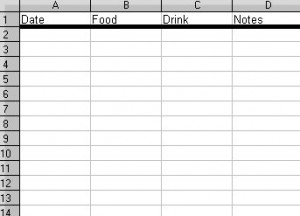
Next, you will need some kind of spreadsheet program. There are many free and paid options for this. Open office has a very nice spreadsheet program called Calc. After selecting a spreadsheet program, you will then need to set up your field headings for the various things you want in your journal.

Here are a few example headings you can include to get you started…

food journal sample

This format is assuming you are going to do daily entries and only keep one row of data for each day. If you want, you can use many rows of data for each day.

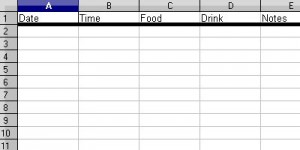
Here is an example of a multiple row per day version of the above example.

foodjournal2

Note that there was only one field added in this example. In this format, you record your details for the date and time specified. You can keep a record for breakfast, lunch, dinner, and snacks by using this format. This way you get more details, but it is also more work. So there is a trade off.

Once you have your fields set up, you can begin recording your journal entries in your notebook, and transferring them to your spreadsheet when it is convenient. Depending on your spreadsheet software, you may eventually be able to make charts and graphs of the fields for easier interpretation.

Although journaling can give you a great amount of information, it is important to keep in mind that you should not necessarily use the results as absolute truth. You may notice a spike in energy or mood on your journal when eating certain foods… but that doesn’t mean that it is good idea to do the things with the highest gains every day. The gains might not even be related to the things you think they are. It could be that the things you ate the day before are related to the advantages. Or it could be that there is no relation at all.

Opinionated Eating

Opinionated Eating

opioninated-eatingThere are many different opinions on what types of food are considered healthy.   The entire topic of health food in itself can be very subjective.  Each person probably has their own idea on what a healthy food actually is.

For example, lets consider a typical sandwich with some sort of meat and cheese.  Depending on who you ask, this may or may not be considered healthy.  Someone may look at the type of bread being used and decide that it does not have enough fiber to be considered healthy, while others may consider bread in general to be a good dietary choice.   The cheese may also lead to some controversy on whether not the particular type is good for you, or even if any type is good for you.    Then there is the meat.  Most of you are probably already at least somewhat aware of the various controversies surrounding meat and its varying types.

There is such a large amount of controversy and debate on just about everything that is edible.  With all this conflicting information, how are you ever supposed to figure out what information is right,  and what isn’t?  One way is to make the decision to stay informed about any current health food information which interests you.

Even if I could give you the single most important food you should eat today according to the most current research, who’s to say that next week some other study wont find that the same food isn’t quite as good as originally thought?  Current research may be able to give you an idea of what our current level of knowledge is on a particular food, but really it is your responsibility to keep yourself informed on the subject because you never know what might change.

On top of reading about the latest research, another great method of finding out what foods are right for you is to listen to your own body and use a bit of common sense.  Sometimes you can tell when a specific type of food does not agree with you.  Finding what does and does not work for you can take time and effort to figure out, but eventually if you put your mind to it, you might be able to get a better picture of what you should be eating.

A good sense of what you should and should not eat can be gained and maintained by applying a combination of common sense, and knowledge you have obtained. If you notice an improvement in yourself, it will reinforce your knowledge with experience. If you notice the opposite, it will also reinforce that new knowledge and give you reason to avoid certain things.  Likewise, if you read up on a particular food and experience consistently good results from wherever you read it, eventually you can get a good list of places you can look for useful information.

Just keep in mind that research and knowledge are a great starting point, but it is also just as important to listen to your body to know if you are really being benefited. What works in a book or web article, may not always work for you.

Healthy Eating at Work

Healthy Eating at Work

For many of us who work at a conventional job, eating a healthy lunch can become quite a difficult task. In order to eat a truly healthy lunch (and not just eat salads every day) you would need to stop eating out almost completely. This means a meal would need to be prepared at home for taking to work every day. Doing this every single work day can become a task which is easily forgotten about as laziness quickly sets in.

Often the last thing you want to do after coming home is to spend the little free time you have making a mid day meal for the next day. Thus, this task can often get left unattended and the cycle of eating quick, cheap and unhealthy food can easily begin.

Listed here are some useful tips on how to break this cycle and keep it broken once and for all. With a good amount of self discipline, you may finally be able to enjoy healthful food at work with as little trouble as possible.


Tip# 1 Prepare what you can on the weekend.

Instead of doing the preparation the morning of, or night before, it is easier and much more efficient to do most or all of the food preparation on the weekend when you actually have the time to do so. This basically saves you from yourself. It helps prevent boredom/stress/laziness of the work week altering your food selection by not giving you the opportunity to go the lazy route during the week and just order quick and unhealthy food.

Even if you only prepare a portion of your meals ahead of time, at the very least you are still giving yourself an extra reason to be motivated. It will be harder to neglect finishing preparation during the work week when you already have half(or more) of the next days afternoon meal prepared. You’ll know that it will be less work, and that it would be a waste of time and effort if you do not use what you had already prepared.


Tip# 2 Buy once, and buy things that will last the week

When you go shopping for your afternoon lunch food for the week, it is useful to buy things that will last the entire week. For example, if you know that you are going to go through an entire bag of carrots in only a few days, get two now instead of having to run out in the middle of the week for more.


Tip #3 Make a list

Make a list of everything you will need before you actually go shopping. This will help ensure that you will not need to run out during the middle of the week for more food(which may tend to motivate you to go for the cheap unhealthy food instead).


Tip# 4 Go for Whole vs Pre-Cut/prepared

There is now a wide variety of food that can be found already pre-prepared for you such as pre-cut pineapple, watermelon, carrots, etc. The advantage of these foods is that you save yourself time by not having to prepare them yourself. The disadvantages can vary widely, but for the most part you may be sacrificing taste, quality, and nutrition, and even money. Pre-prepared foods can be more expensive, contain preserving chemicals, and look artificially fresher than they really are.


Tip# 5 Stay away from packages.

For the most part, you are better off staying away from the packaged items(with a few exceptions). If you are going to buy packaged/frozen dinners, you may as well just be eating out. The point in buying and bringing food with you instead of going out is to get fresh, healthy food (unless your only goal is to save money).